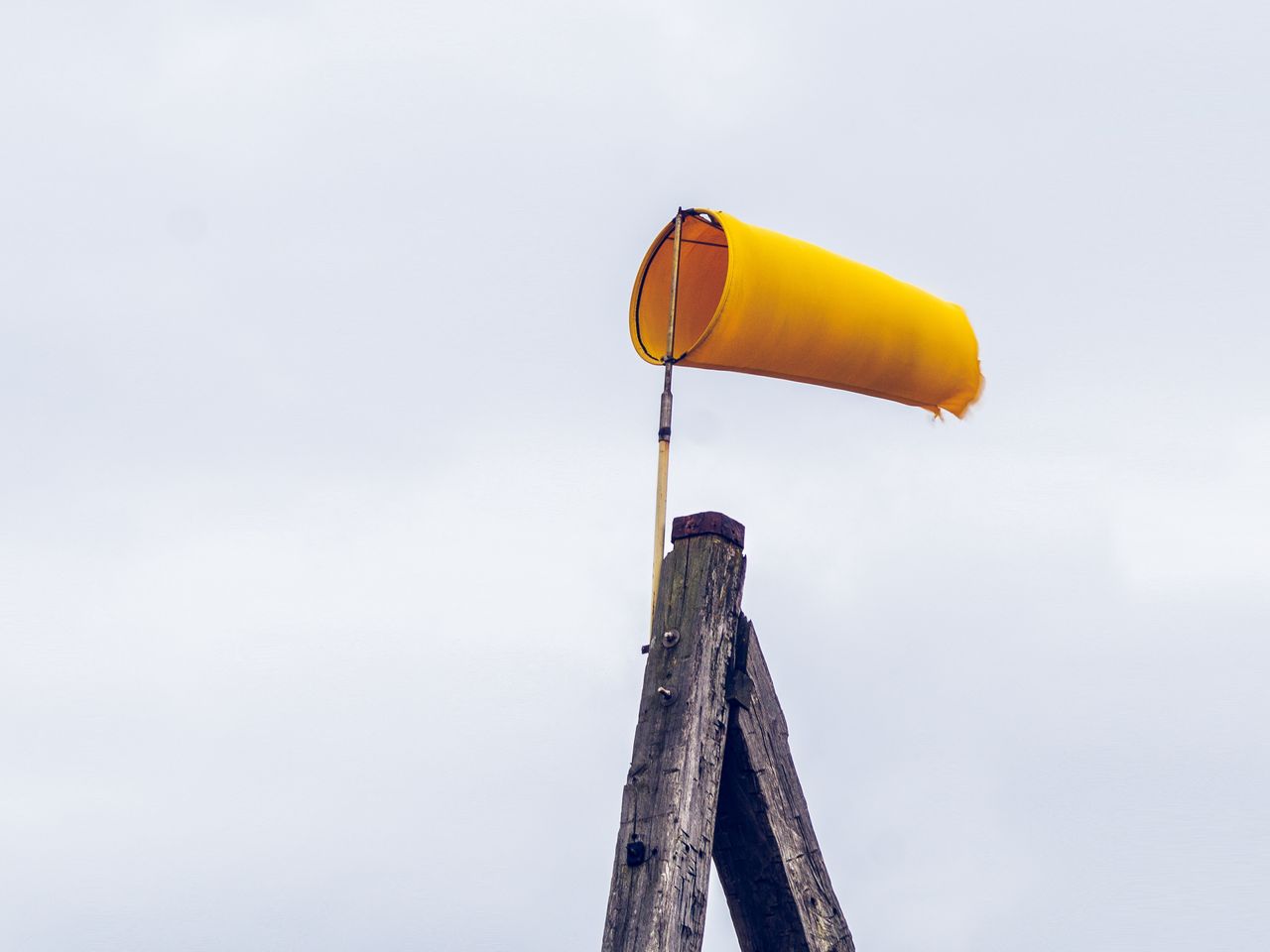
While clear skies and great visibility are ideal conditions for a jump, wind speed plays a crucial role in determining whether a skydive is safe or not. In this article, we will explore the limits of wind speed for skydiving and what makes certain wind conditions unsafe.
In the US, solo students may jump in ground winds up to 14 mph (22 km/h) under the square (ram-air) canopy most skydivers fly, or 10 mph (16 km/h) if their reserve is an older round canopy. Tandem and licensed jumps have no fixed limit: the tandem instructor, the drop zone (the skydiving center) and the jumper decide. One experienced team, for example, stops at 25 mph (40 km/h).
Yes, gusty and variable winds can be more dangerous than steady high winds. They cause unpredictable changes in wind speed and direction, making canopy control difficult and increasing risk of dangerous landings.
Understanding weather forecasts and wind patterns is critical to planning a jump. Check ground-level wind speed, gusts, wind direction, and be aware of expected weather changes throughout the day.
Yes, wind direction significantly impacts landings. Crosswinds can push skydivers sideways, while headwinds slow forward motion for softer landings but may make it difficult to reach the landing zone if too strong.
You can prepare for your jumps with Sonuby Weather, a specialized forecasting tool designed for skydivers that provides detailed weather parameters globally and is available for free on iOS and Android.
Wind limits exist because of the risk of injury during landing. High wind speeds at ground level can cause rapid changes in direction, making it difficult to control the canopy and increasing the likelihood of a hard landing. How much wind is too much depends on who is jumping.
Students: In the US, the United States Parachute Association (USPA) sets the maximum ground wind for solo students at 14 mph (22 km/h) under a ram-air canopy, the square canopy most skydivers fly, and 10 mph (16 km/h) if their reserve is an older round canopy.1
Licensed skydivers: The USPA sets no limit at all: each drop zone (the skydiving center they jump at) and each jumper decides.1 Where a jumper stops depends on their canopy: a big canopy carrying a light jumper flies slower, and the wind should stay below its forward speed.2 One experienced team, for example, stops at 25 mph (40 km/h), and at gusts more than 10 mph (16 km/h) above the steady wind.2
Tandem jumps: The USPA sets no wind limit for these either.1 United Parachute Technologies, which makes the Sigma tandem system, gives no fixed figure in its manual: it leaves the call to the tandem instructor’s judgment, and asks for a conservative one.3
Steady winds are one thing, but gusts and variable winds are another. Gusty conditions can cause sudden and unpredictable changes in wind speed and direction at ground level, making it difficult to control the canopy. Variable winds, where wind speed and direction change rapidly in a short period of time, can be particularly dangerous. These conditions can cause a skydiver to lose control, resulting in a dangerous landing or collision.
The direction of the wind is also important. For example, crosswinds - winds that blow perpendicular to the landing direction - can push skydivers sideways, making landings more difficult. Headwinds (winds blowing against the direction of the landing) can be beneficial because they slow the forward motion, allowing for a softer landing. However, too much headwind can make it difficult to reach the landing zone.
Wind speeds at higher altitudes can be significantly different from those on the ground, and are often higher. The wind limits above are about ground level, since that’s where takeoff and especially landing happen. Winds aloft still matter: they decide where the plane should drop jumpers so they can reach the landing area, and with strong winds aloft, groups need more time between them as they leave the plane.4 Strong winds aloft push the whole jump a long way, so check them along with the ground forecast.
As a skydiver, understanding how to read a weather forecast is critical. Here’s what to look for:
As crucial as the weather is to skydiving, having a reliable weather forecasting tool is key. This is where Sonuby Weather excels. Designed for skydivers, it provides a detailed daily overview of all essential weather parameters from above: ground-level wind speed and gusts and wind direction throughout the day and the week.
What makes Sonuby Weather special is its global coverage. You can plan jumps anywhere in the world, with forecasts tailored specifically for skydiving. Its user-friendly interface makes understanding weather conditions easy and efficient.
Sonuby Weather is an invaluable tool for skydivers. It simplifies the process of assessing weather conditions, ensuring you’re well informed and ready for a safe, enjoyable jump.
You can download it for free for both iOS and Android.


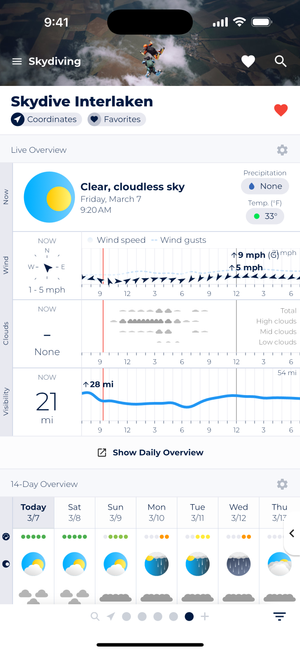
Quickly check if conditions are good for your next jump with the Live Overview and the 14-Day Overview.
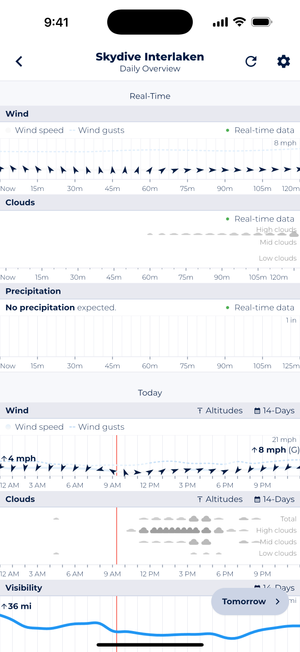
Daily Overview allows you to drill down to specific days and review conditions for specific days.
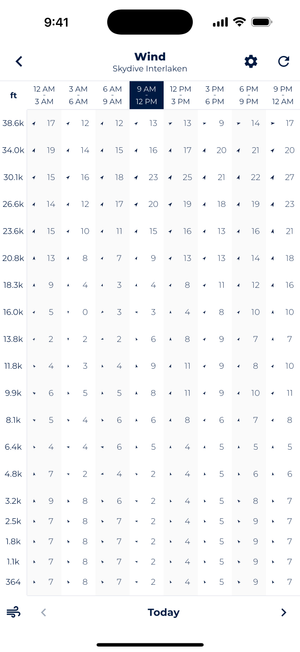
Altitude forecasts for wind, clouds, and temperature allow you to further prepare for your jumps.
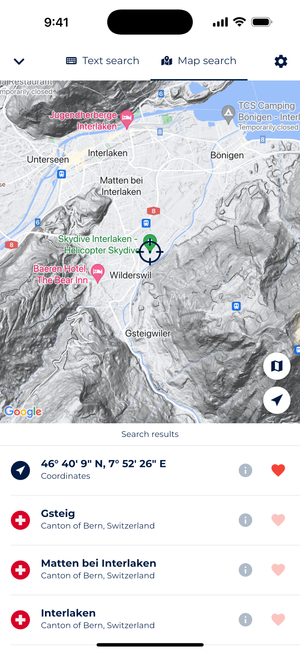
Map Search allows you to point to any drop zone on the face of the earth and see forecasts for it.
Skydiving is an exciting sport that requires respect for the weather, especially ground wind conditions. By understanding wind speed limits and keeping to their drop zone’s and their own, being aware of gusts and variable winds, and learning how to effectively read weather forecasts, skydivers can ensure a safe and enjoyable experience in the sky. Remember, when in doubt, it’s always better to take the safe route and postpone your jump to another day.
Resources:
[1] United States Parachute Association, Skydiver’s Information Manual, Section 2-1: Basic Safety Requirements. https://www.uspa.org/sim/2-1
[2] Parachutist: Are These Winds OK to Jump In? https://parachutist.com/Article/are-these-winds-ok-to-jump-in
[3] United Parachute Technologies, Sigma Tandem Operations Manual (MAN 016, Rev 2), Weather Assessment: Wind Limits. https://uptvector.com/wp-content/uploads/2025/12/Man016_Rev2-Sigma-Tandem-Operations-Manual.pdf
[4] United States Parachute Association, Skydiver’s Information Manual, Section 4-7: Spotting. https://www.uspa.org/sim/4-7


